
Insights
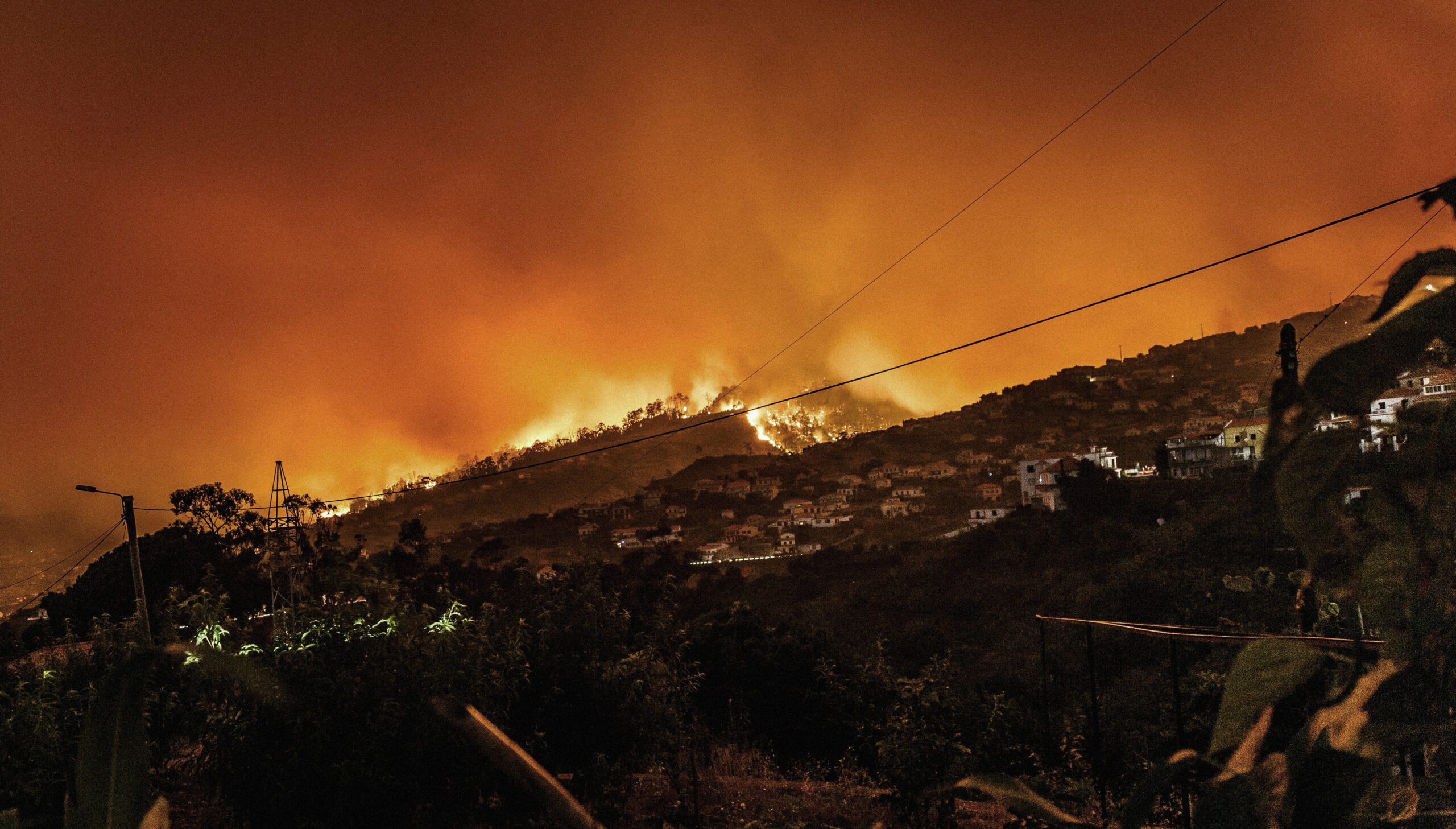
Climate risks represent the possibility that current or future climate phenomena may produce negative consequences for people, activities, assets, infrastructure and territories.
The level of risk does not depend only on the intensity of an event, but on the interaction between hazard, exposure and vulnerability.
Understanding these factors is essential to assess impacts, define intervention priorities and turn climate data into operational decisions.
In this article, we will explore:
Climate risk is the probability that a climate phenomenon will produce negative impacts.
Unlike a climate hazard, which indicates only the possibility that an event may occur, risk measures the effects that the same event can generate in a specific context.
Its level is determined by the combination of four elements:
A flood represents a climate hazard. Risk, on the other hand, depends on what may be affected, the level of vulnerability of the assets present and the consequences that potential damage may produce.
For this reason, the same event can have very different impacts. A flood affecting critical infrastructure may interrupt essential services, while the same flood in a less exposed area may cause limited consequences.
Risk does not depend only on the climate event, but also on the characteristics of the territory and the elements exposed.
Physical risks derive from the direct effects of climate change on people, infrastructure and economic activities.
They are divided into:
These phenomena can cause damage to assets, interrupt production, compromise critical infrastructure and reduce operational continuity.
Transition risks are linked to the shift towards a low-carbon economy and should not be confused with physical risks.
They may arise from:
For many organisations, these elements can influence investments, competitiveness and development strategies as much as the physical impacts of climate events.
These are legal and regulatory risks arising from a failure or inadequate consideration of climate impacts in business decisions, risk management and communication with stakeholders.
They arise when an organisation cannot demonstrate that it has correctly identified, assessed or managed climate risks, or when the information communicated is incomplete, misleading or not aligned with the available evidence.
| Category | Example |
|---|---|
| ACUTE PHYSICAL RISKS | A wildfire damages an overhead transmission line and requires emergency intervention |
| A flash flood inundates an electrical substation and suspends supply | |
| A landslide damages the railway track bed and requires services to be suspended | |
| A cloudburst floods a road underpass, making it impassable | |
| CHRONIC PHYSICAL RISKS | Prolonged drought reduces water availability for cooling industrial plants |
| Heatwaves reduce the transmission capacity of overhead power lines | |
| Sea-level rise threatens substations and coastal facilities | |
| Rising average temperatures accelerate the degradation of asphalt and railway tracks | |
| TRANSITION RISKS | New resilience obligations imposed by the CER Directive on energy network operators |
| CSRD requirements require the physical exposure of infrastructure assets to be quantified | |
| Rising insurance costs for infrastructure in areas with high climate risk | |
| Updated technical standards require adaptation measures on existing lines and sections | |
| LIABILITY RISKS | A network operator cannot demonstrate that it mapped climate risk and is held responsible for an avoidable interruption |
| An organisation communicates sustainability data that is inconsistent with its actual risk exposure and is held accountable by stakeholders and regulators | |
| An outdated adaptation plan exposes the company to legal challenges after a damaging event |
The impacts of climate risks are not limited to visible damage to assets. An extreme event can compromise the organisation’s operational continuity and produce economic consequences that extend far beyond the site directly affected.
For this reason, it is important to distinguish between:
Even in the absence of significant structural damage, an organisation may experience:
These effects are compounded by indirect repercussions on supply chains, logistics, suppliers and demand, which can amplify the initial impacts.
A landslide interrupts the only access road to a manufacturing plant.
The facility suffers no damage, but employees cannot reach the site and raw materials are not delivered.
Production stops, orders are delayed and the company incurs additional costs despite the absence of direct damage to its assets.
For those managing distributed networks and infrastructure, climate risk does not depend only on the exposure of a single asset.
Service continuity is influenced by the interaction between sections, nodes and strategic components, which may respond differently to the same climate event.
A power line, a transmission network, road or railway infrastructure and a telecommunications network cross territories with very different characteristics.
Flooding, landslides, wildfires, extreme heat, erosion or the interruption of access routes can compromise individual elements of the network and generate effects that propagate far beyond the point where the event occurred.
The resilience of a network is built by understanding how risk is distributed across its connections, rather than looking at individual assets in isolation.
For this reason, the analysis must compare the level of risk across different network segments, identify the most critical nodes and define intervention priorities.
Climate risks are not uniform across Italy. Intensity and exposure vary depending on the morphology of the territory, local climate conditions, the level of urbanisation and the presence of infrastructure.
The main phenomena affecting Italy include:
Understanding where risk is concentrated is what makes it possible to turn climate information into an operational decision.
The same principle applies at European scale. Mediterranean, Alpine, coastal and continental areas have different risk profiles and require specific assessments.
The first European Climate Risk Assessment by the European Environment Agency identifies 36 major climate risks for Europe, including the 7 that directly affect infrastructure:
For this reason, risk assessments cannot be based on uniform analyses.
A high level of geographical granularity makes it possible to compare territories, identify the most exposed areas and support more effective decisions to protect assets and infrastructure.
Climate intelligence integrates historical and forecast climate data, scenarios, scientific models, satellite imagery, geospatial data and technical information on assets to turn them into an operational view of risk.
It makes it possible to identify where risk is concentrated, how it may evolve over time and which assets require priority intervention.
This approach supports decisions such as:
When risk becomes measurable, it also becomes manageable.
Risk conditions change over time. For this reason, analyses and priorities must be continuously updated to reflect the evolution of climate, territory and assets.
Airis is the climate intelligence platform developed by Eoliann to turn complex climate data into operational decisions.
By integrating climate, geospatial and asset-level data, it enables organisations to analyse physical risk across infrastructure and strategic assets, visualise how it evolves under different climate scenarios and define intervention priorities to support maintenance, investments, operational continuity and adaptation strategies.
Discover related content.
Want to go deeper?